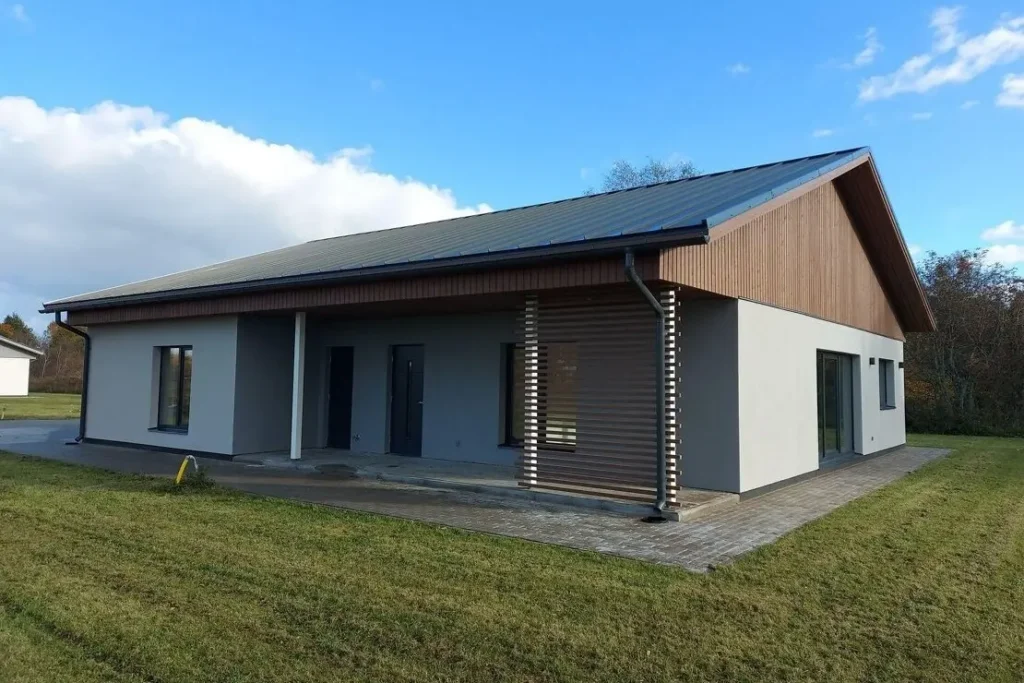
Occupancy permit.
Legal commissioning of a completed building – documentation, on-site inspections, and permit issuance from the municipality.
When a building is nearing completion, one important final step remains – obtaining an occupancy permit or submitting a notice of occupancy. Many building owners discover at the final stage that construction documentation is incomplete, required construction-time measurements were not carried out, or the building was constructed differently from the approved building permit project. These issues can easily turn a simple 30-day process into several months of delays.
We help prevent long waiting times for the occupancy permit, because we know exactly what is needed and how to obtain the required documents, ensuring your building receives official approval smoothly and on time.
What is an occupancy permit and why is it necessary?
An occupancy permit is confirmation from the municipality and the Rescue Board that your building complies with all construction and safety requirements and has been built according to the Building Code. An occupancy permit gives you the legal right to use the building for its intended purpose – living, business activity, or other use.
Without an occupancy permit or a notice of occupancy:
1. You may not live in or use the building
2. Property sale or notarisation becomes difficult
3. Banks may refuse to issue a loan or impose unreasonable interest rates
4. Insurance companies may refuse coverage
5. The municipality may fine private persons up to €6400 and companies up to €64,000
An occupancy permit is typically required for:
1. New residential or commercial buildings
2. Major reconstruction
3. Changing the building’s intended use
4. Extending a building by more than 33%
5. Property transactions involving older buildings
6. As specified in Annex 2 of the Building Code
A notice of occupancy may be sufficient for:
1. Smaller buildings
2. Simple renovation works
3. Extensions below 33%
4. When permitted by the Building Code
The need for an occupancy permit or notice of occupancy is determined by Annex 2 of the Building Code.
If you are unsure whether your building needs a permit or a notice, contact us – we provide a free initial assessment.
How we help you – our occupancy permit service.
Applying for an occupancy permit is more than submitting documents. It requires accuracy, experience, and thorough understanding of applicable laws and requirements.
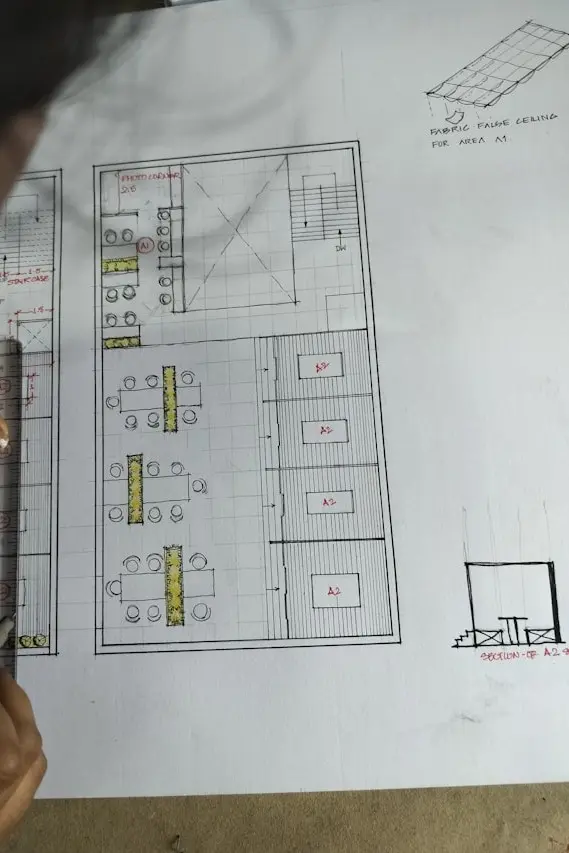
If you use our site supervision service:
If you have ordered our site supervision, then from the notice of commencement onward we ensure all required documentation is ready for applying for the occupancy permit. This means:
Construction logbooks correctly filled and signed by competent persons
Covered work reports properly prepared and signed
Certificates of conformity for materials
Geodetic control surveys ordered at the correct time
Required construction-time tests and measurement protocols
Required speciality designs or as-built drawings
Electrical safety ensured and electrical audit completed
Gas installations are safe and audited
A functioning and balanced ventilation system supported by a protocol
Potable water quality approved by the Health Board
The building is compliant with fire safety requirements
Elevators are properly built and technically inspected
Result: Applying for the occupancy permit is fast and smooth because everything is already prepared.
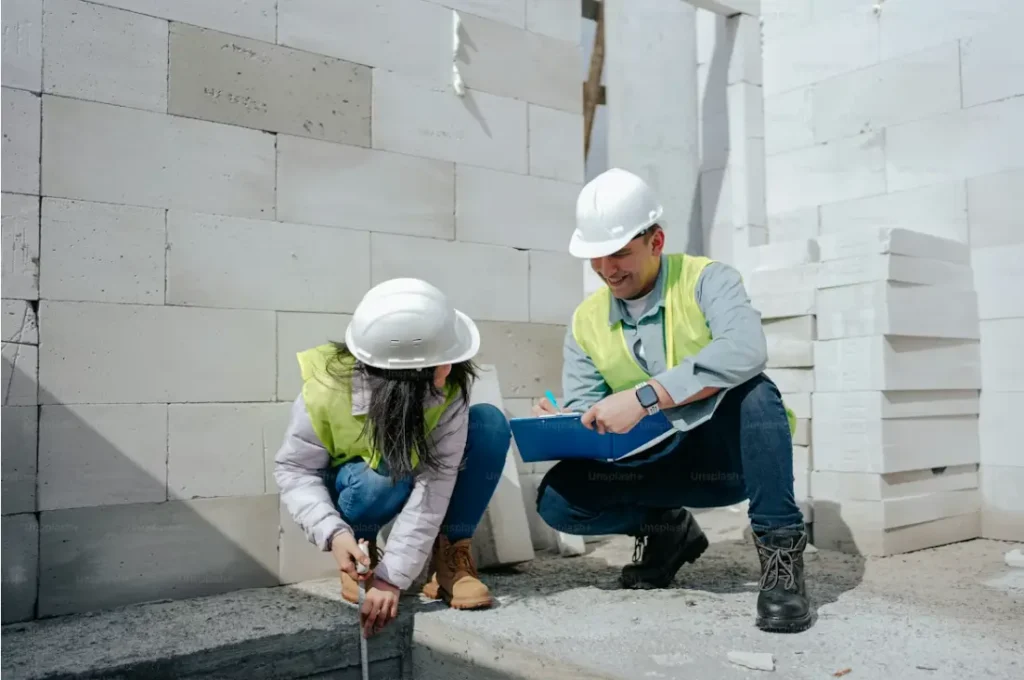
If site supervision was not used or the builder lacked required competencies:
If construction was carried out without site supervision or by an unqualified builder, we collect or prepare all necessary documents retrospectively:
Review existing documentation
Complete missing documents
Prepare required reports and certificates
Arrange audits and inspections
Contact builders and subcontractors for required documentation
If necessary, prepare a building inspection audit
This takes more time and may cost more, but ultimately ensures that the building receives its occupancy permit.
The prerequisite for obtaining an occupancy permit is that the building must be constructed according to the building permit project. This is the most important aspect the municipality checks.
What happens if the building differs from the approved project?

If the construction process has significantly altered, for example:
The facade (colours, materials, window dimensions, architecture)
Room layout or sizes
Load-bearing structures
Roof slope or shape
Terrace or paving areas
Added exterior heating or cooling units
…then a modification project or a new design project is required for obtaining the occupancy permit.
This modification or design project must be submitted to the municipality during the occupancy permit application. Without it, the occupancy permit will not be issued.
We help evaluate whether the changes are significant and, if needed, arrange preparation and approval of the required project documentation.
Required audits and inspections.
Depending on the building type, size, and technical complexity, various audits and inspections are required to confirm that the building is safe and its technical systems operate correctly.
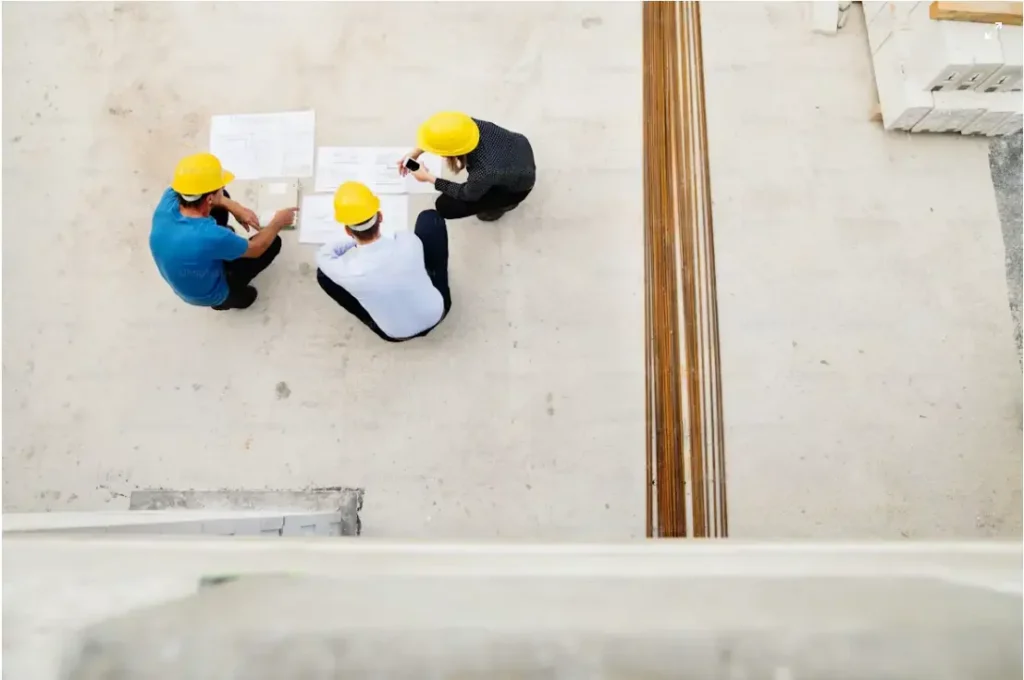
Most common required audits:
Ventilation system certificate
Checks air exchange, balance, and noise levels
Electrical system audit and measurements
Confirms the safety of electrical installations
Heating system inspection
Ensures the reliability of the system
Building depressurization test and thermography
Confirms compliance with the energy performance certificate
Geodetic control survey
Confirms the building’s location and dimensional accuracy
Building inspection
If the construction project, construction logbooks, or covered work reports are missing
We organize and coordinate all required audits and expert assessments through accredited and experienced partners.
Occupancy permit documentation – checklist.
The occupancy permit application requires a comprehensive set of documents. The full list is defined by Government Regulation, but the main checklist includes:
Mandatory documents:
Construction logbooks, correctly completed and signed.
Covered work reports, properly prepared and signed.
Certificates of conformity for construction materials.
Geodetic control survey, staking-out report, post-construction survey, and data submission to the municipal GIS.
Construction-time studies (soil bearing tests, depressurization tests, thermography).
Speciality projects and as-built drawings.
Electrical audit.
Gas installation audit.
Ventilation system certificate.
Microbiological and chemical analysis of potable water.
Fire safety documents.
Elevator inspection report.
Modification project (if building differs from approved project).
Required photos.
Possible additional documents:
Tree felling permit.
Excavation permit (if digging outside the plot, e.g. utilities).
Proof of replacement planting.
Copies of consumption contracts.
Waste disposal certificates.
Environmental compliance certifications.
Neighbour approvals.
Noise analysis of technical equipment (heat pumps, ventilation outlets).
Urban heat island impact analysis.
Important: Municipalities may require additional documentation depending on project location or type.
We know exactly what your project requires and check everything before submission.
Cost of the occupancy permit service.
For a simple building, the occupancy permit service starts from €400, assuming all documents exist, are correctly prepared, the building fully complies with the building permit , and no additional issues are present.

The price includes:
Initial consultation and review of existing documentation.
Obtaining missing documents (if no extra costs apply).
Verification that the building matches the building permit project.
Preparing and submitting the application to the municipality.
Communication with authorities.
Resolving remarks.
Monitoring and reporting until the occupancy permit is issued.
For an exact offer, contact us – we will assess the situation and prepare a proposal.
Common mistakes and issues when applying for an occupancy permit.
We have seen dozens of recurring issues that cause delays and costs:
Construction logbook is incomplete or missing
Many builders do not fill in construction logbooks correctly or fail to do so at all. However, this document is mandatory and must include all essential works and changes.
Covered work reports are missing
Sewerage, water, cables, insulation, wind barrier, vapour barrier, underlayment, concrete reinforcement, waterproofing – if these parts are built inside the structures, a covered work report is required. Without covered work reports, an occupancy permit cannot be issued.
Geodetic control survey differs from the approved building permit project
The building has been constructed in a different location, at a different height, or with different dimensions. This is a problem and requires a solution.
Facade or structural changes have been made
The project specified grey plaster, but red bricks were used instead. Windows were supposed to be 1.2 × 1.5 m but were built as 1.5 × 2.0 m. In such cases, a modification project is required.
Landscaping and environmental requirements are not fulfilled
The required amount of landscaping is missing, removed trees have not been replaced, stormwater is directed onto the street.
Certificates of conformity for materials are missing
All materials used must be certified. If certificates are missing, the construction work must be investigated and the necessary documentation obtained retrospectively.
We review all these points before application and help prevent or resolve problems, significantly speeding up the process.
Legalisation of an unpermitted building.
If your building or part of it was constructed without the required building permit, legalisation is possible. This is a complex process, but achievable.
Legalization of buildings
Legalisation procedures largely follow the same requirements as obtaining an occupancy permit, with a few differences in the Building Register.
Legalising an unauthorised building usually takes longer but is the only way to make it legally compliant.
We have helped legalise dozens of buildings and know how to navigate the process in different municipalities.

Frequently asked questions about the occupancy permit.
How long does the occupancy permit process take?
The fastest scenario is 30 days — we have been able to obtain the occupancy permit for clients within this timeframe when all documents were available and correctly prepared, site supervision was carried out throughout the construction, the building matched the project exactly, and all audits were completed and positive.
Longer processes, which may extend up to 10 months, usually occur when important documents are missing and previous work has been done inadequately or not at all, making the occupancy permit application costly and stressful.
Can the owner apply for the occupancy permit themselves?
Yes, the owner may prepare the occupancy permit application themselves, but this requires time, thorough knowledge of regulations and technical requirements, the ability to communicate with the municipality and the Rescue Board, operate within the Building Register, and collect and format all necessary documents together with reliable partners.
If this feels complicated, we can help.
How many successful occupancy permit cases have you handled?
We have been working with occupancy permits since 2016, and as of 2025, we have successfully obtained 135 occupancy permits for a wide range of projects — from private houses and apartment buildings to commercial buildings, auxiliary structures, development projects, and the legalisation of constructions — covering both simple and complex projects across Estonia.
Is an occupancy permit required for selling property?
Yes, if the building or apartment requires an occupancy permit, then without it:
- The transaction cannot be notarised
- The bank will not issue a loan to the buyer or may impose unreasonably high interest rates
- Buyers may withdraw from the transaction
The occupancy permit is especially important for new developments — without it, owners cannot use or sell the property.
Have there been refusals to issue an occupancy permit?
Yes, there have been cases where the municipality has refused to issue an occupancy permit, mainly because the building did not comply with the building permit, mandatory audits were missing or negative, environmental conditions and documentation were insufficient, or the building did not meet fire safety requirements. This is why our goal is to prevent such situations and ensure compliance before the application is submitted.
Is an occupancy permit required for older buildings?
For buildings constructed before 1995 that have a correct entry in the Building Register and have not been extended or reconstructed since then, an occupancy permit is not required. However, if the building has been constructed, extended, or reconstructed after 1995, an occupancy permit is mandatory.
Applying for an occupancy permit for an older building can be challenging, as the original documentation may not have been preserved. We help collect the necessary documents and prepare the missing ones.
What is the difference between an occupancy permit and a notice of occupancy?
Occupancy permit – the official permit issued by the municipality after thorough inspection and submission of documentation. Required for larger and more complex buildings.
Notice of occupancy – a simplified procedure for smaller and simpler buildings or when adding technical systems.
We help determine which one your project requires.
Contact us – start the occupancy permit process the right way.
Applying for an occupancy permit or notice of occupancy requires experience, precision, and a solid understanding of requirements. With construction expertise dating back to 2001 and 135 successfully issued occupancy permits, we provide confidence and peace of mind.
Don’t let the final stage of your project become stressful.
Contact us today for a free consultation – we’ll discuss your project and provide professional guidance.
Next step: We recommend periodic building inspection audits and maintenance to keep your building safe and energy-efficient. If you’re planning a new project, check out our building permit or site supervision services to start the process correctly from day one.